

Hs Code For Shirts

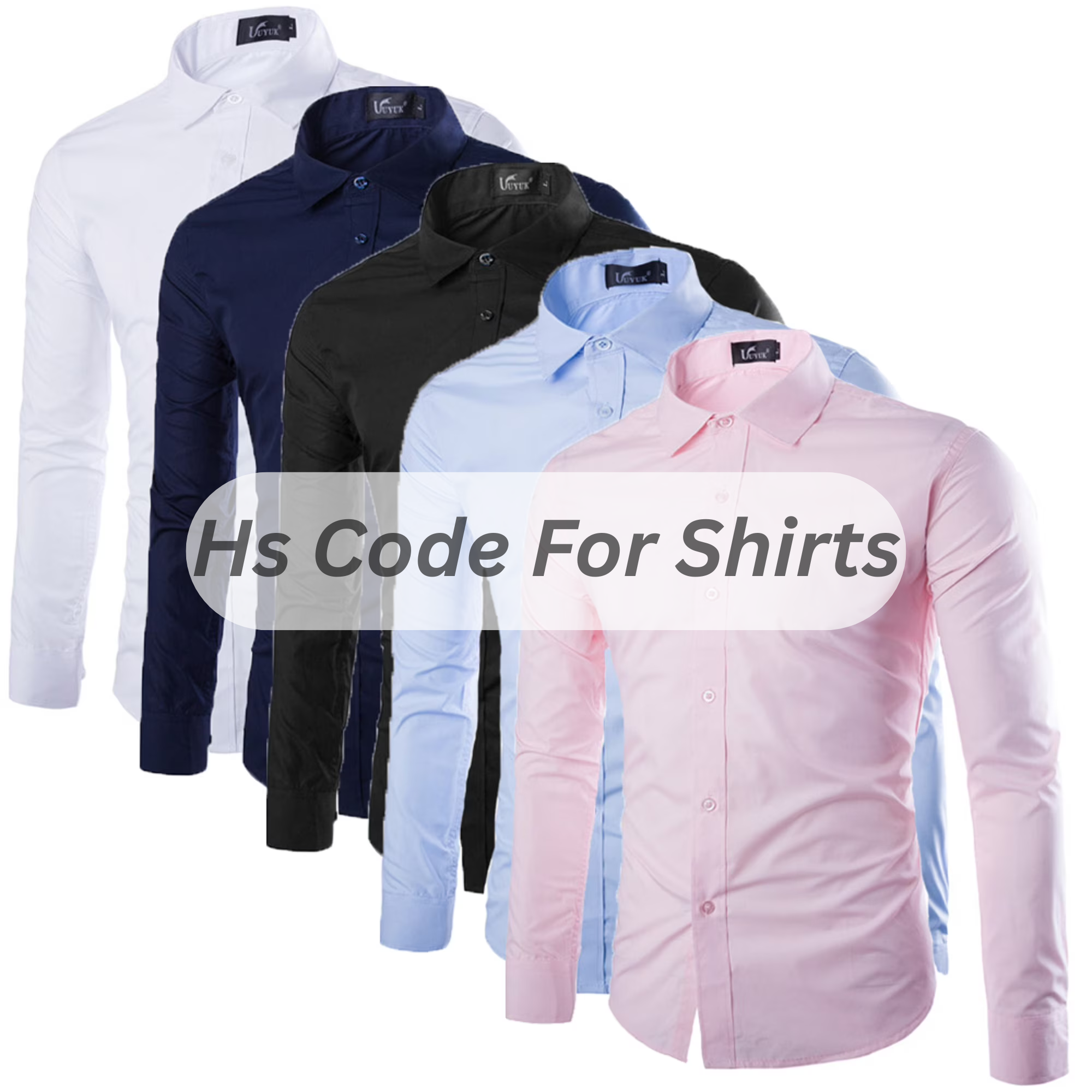
In international trade, every item is identified with a unique numerical code to simplify global trade The HS Code for shirts serves an important function as it identifies and regulates how shirts are exported and imported across countries Regardless of whether a trader sells custom, knitted, or synthetic shirts or other garments, knowing which shirt HS Code is completely correct will allow for a problem-free customs clearance and accurately duty calculation.
The shirts Harmonized System Code (HS Code) is a part of a global classification system established and maintained by the World Customs Organization (WCO) The world HS Code for shirts helps establish a standard on how countries define and document trade items which allows importers and exporters to communicate with interoperable meaning When businesses and traders select the HS Code for shirts in garments correctly, not only does it help eliminate customs disputes, but it also helps the business comply with applicable international trade laws.
The specific HS Code classification determined for shirts will be based on various aspects, for example the fabric type, gender category and the manufacturing method of the product Men’s and women’s shirts will often be in different categories, i.e. The HS Code for men’s shirts is likely different from the HS Code for women’s shirts, even when constructed of the same fabric The same is true for cotton vs. polyester or synthetic fabrics, both have separate entries under HS Code chapter 62 which is limited to wearable apparel and clothing accessories, and does not include knit or crocheted fabrics.
Generally speaking, when traders are bringing in cotton apparel they will use Hs Code for cotton shirts, whereas if they are bringing in knitted shirts they will use the knitted shirt HS Code located in Chapter 61. These HS Code numbers allows customs officials to identify if the product is woven or knitted to collect the appropriate tariff For example, If you have a tariff code for shirts, than you would be gathering the correct import duty or tax for a specific product entering a specific country.
Proper classification is not only to assure compliance it also impacts the cost of trade If you use the wrong import-export HS Code for your shirts, you may suffer shipment delays, penalties, and/or unnecessary duties For this reason, importers usually depend on a professional lookup tool or an official government database for the most accurate HS code lookup for shirts In addition, many countries include extensions to the global six-digit HS code format for example, the HS code for cotton shirts may be extended to eight or ten digits, depending on the tariff schedules of each country.
For apparel businesses and fashion export companies, understanding the apparel HS Code allows for easier logistical planning and clarity with customs Ultimately, finding the apparel HS code for shirts is not simply a regulatory step, but a practice that establishes trust in global supply chains Learning these code(s) creates assurance that every shipment of shirts arrives safely, accurately classified, and accurately duty amount collected.
| Product Description | Hs Code |
|---|---|
|
100% COTTON WOVEN MENS SHIRTS (SAMPLE) |
6205.2000 |
|
MENS SHIRTS (FULL SLEEVE): 100% COTTON SHIRTS (WOVEN) WITH SAMPLE & ACCESSORIES7 HANKIES |
6205.2000 |
|
READYMADE GARMENTS- SAMPLES FOR SALESMAN:- 100% COTTON WOVEN MENS SHIRTS WITH 100% COTTON KNITTED (JERSEY) LINING SIZE: |
6205.2000 |
|
100% COTTON WOVEN MENS GARMENTS SAMPLE(SHIRT) |
6205.2000 |
|
MENS SHIRTS (FULL SLEEVE): 100% COTTON SHIRTS (WOVEN) WITH SAMPLE & ACCESSORIES-COLLAR (4) |
6205.2000 |

