


Introduction
Pakistans Export Scene Live and Unfiltered
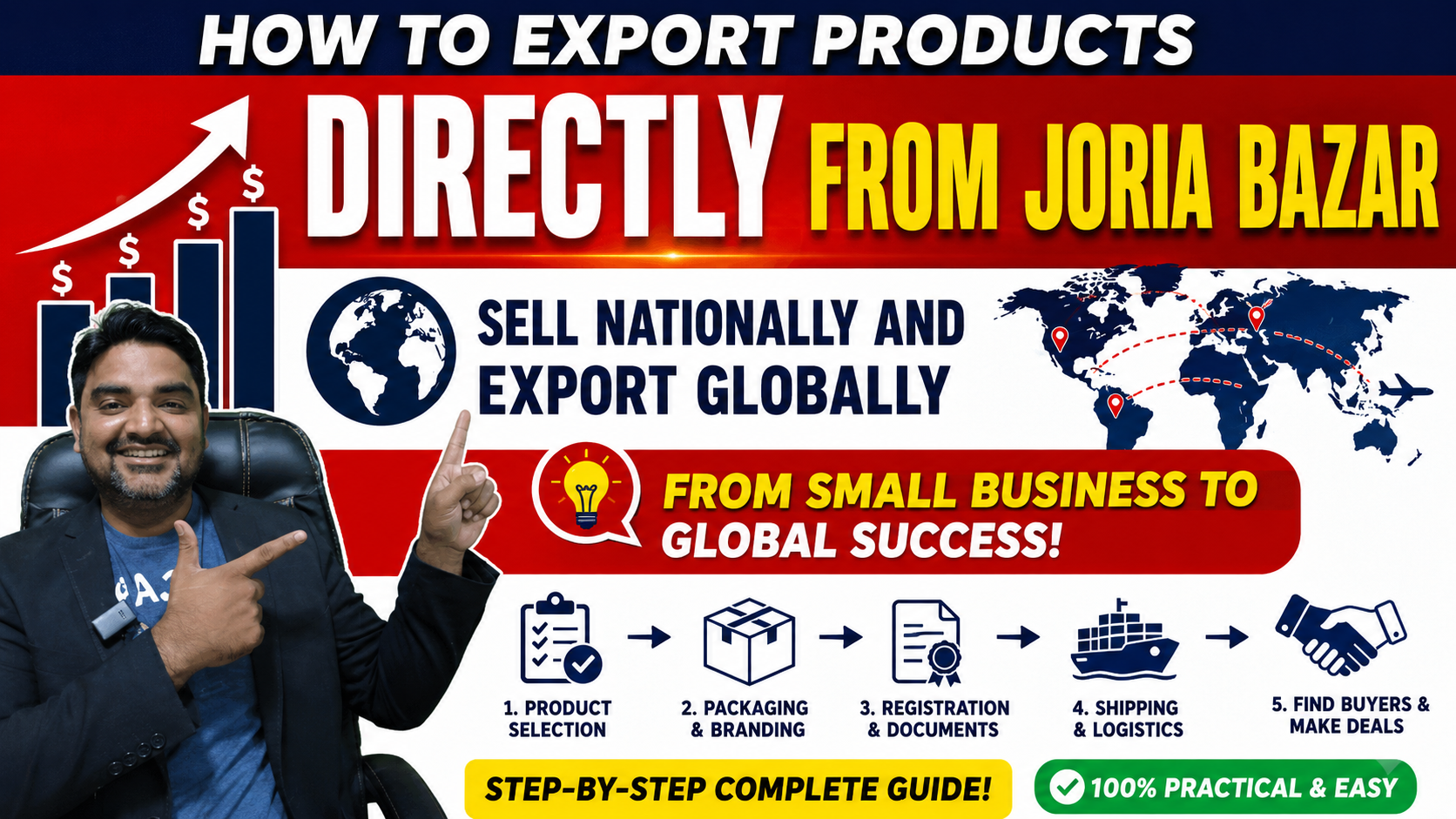
Pakistans export business is really exciting and moves quickly. You can see this clearly in Joria Bazaar, Karachi. We are going to take you on a journey: from finding products at Karachis largest wholesale market to packing a full export container for customers abroad.
If you are a living abroad who wants to import products from home or a buyer looking for affordable goods from Pakistan or just interested in how Pakistans export system works. This guide is, for you.
What Is Joria Bazaar Pakistans Largest Wholesale Market
Joria Bazaar is a big deal in Karachi. It is considered the wholesale market in the city and one of the biggest in all of Pakistan. This market is right in the middle of Karachi. Has almost everything you need.
Some of the things you can find at Joria Bazaar include:
- Household goods and daily-use items
- Ropes, mats, brooms and other useful products
- Industrial and agricultural supplies
- Locally made goods at wholesale prices
Lots of people love Joria Bazaar because it has so much variety and the prices are very competitive. You will see importers, distributors and wholesalers all working together. The market is really lively. There are donkey carts, delivery vehicles and vendors all moving around in a organized way.
For people who export goods Joria Bazaar is a place to find what they need. You can get any product made in Pakistan at a good price, which makes it perfect for filling export containers without spending too much. Joria Bazaar has a lot of opportunities, for exporters.
What Products Were Sourced for This Export Container
For this container we got two products from Joria Bazaar along with the main thing we were exporting. Colorful decorative mats.
1. Cotton Rope
We got cotton rope, which is also called cotton coil rope. This is a good product that people want to buy from other countries. Here are some details about it:
- It comes in thicknesses: 6mm, 8mm 10mm 12mm 16mm and 20mm
- We packaged it by wrapping each bundle in polythene and then putting it in a sack
- We sent a batch of 20-25 bundles to a buyer in another country to see if they like it before we send a lot more
Cotton rope is a valuable thing to export so we did not want to send a lot of it without the buyer checking the sample first. The person exporting it said: “Cotton rope is expensive so we are careful. You check the sample carefully. Then we will send the rest.”
2. Broom Sticks
The product we got was broom sticks, which are made from natural fibers like coconut. We call one type of broom the Tili broom. Here are some things about it:
- We ordered them 2-3 days before we loaded the container
- We put them in bundles of 10-12
- We sent three types of brooms so the buyer could see all the options
Broom sticks are not too expensive to export and people always want to buy them especially in places where they like to use natural things to clean.
3. Colorful Decorative Mats
The thing we were exporting was colorful woven mats, which are a popular thing made in Pakistan that people like to buy from other countries. These mats took up most of the container. We stacked them carefully so we could fit as many, as possible. Colorful decorative mats were the product and we made sure to load them in a way that used the space well.
The Sourcing Process How Products Were Bought from Joria Bazaar
The way products were sourced from Joria Bazaar was very personal and based on relationships. This is what happened in this case:
Step 1. Pre-Order Placement
The exporter placed orders for cotton rope and brooms a few days before they were needed. He did this so that the suppliers could have the products ready when he arrived. The suppliers made sure the products were bundled and ready to go.
Step 2. Personal Quality Inspection
The exporter went to Joria Bazaar to check the products himself. He said “I check everything myself. I even look at the sample material before I send it.” This way of doing things helps build trust with buyers from countries.
Step 3. Packing at Source
The cotton rope was packed in two layers. In polythene and then in sacks. Right there in the market. This was done to keep the products clean. The brooms were tied up neatly so they could be transported easily.
Step 4. Transport to Container Loading Site
The streets in Joria Bazaar are very crowded. So the best way to move the products was by donkey cart. The exporter wanted to use a Suzuki pickup but the donkey cart driver was very good at his job. He loaded all the products. Navigated the crowded streets easily. This is what logistics looks like on the ground in Pakistans export industry.
Step 5. Delivery to the Loading Yard
All the products were taken from Joria Bazaar to the container loading site near the Karachi port. The export container was waiting there to be loaded with the products, from Joria Bazaar.
The Container Loading Process A Look
Finding The Right Export Container
I found it really interesting when I heard about the problems people had when they were trying to find empty containers to export things. The plan was to fill up the containers in Punjab. They could not find any empty containers in Lahore. They looked for than three days and then they came up with a solution.
- They brought a container that already had things in it from Punjab to Karachi
- They took the things out of the container
- Then they used that container to put the things they wanted to export in it like mats and rope and brooms from Karachi
This cost a lot of money but they had to do it because they promised their customers they would.
This shows that it can be really hard to find containers in Pakistan and it depends on where you’re what time of year it is.
Choosing The Right Shipping Line
The person who was exporting the things chose a shipping line that would take the container directly to its destination. They did this because:
- It takes time to get to where it is going
- The container gets to countries in twelve to eighteen days, which is a lot faster than if it had to stop at a lot of other places
- This is especially important for things like mats that can get damaged if they are on the ship for too long
What Goes Inside The Container Matters
Loading a container is not just about putting things in it. You have to make sure everything is stacked up right and that you use all the space. The person who was exporting the things was making sure that:
- Every little bit of space in the container was used
- The bundles were stacked up correctly
- Nothing was left behind because it was not packed right
The exporter said “If you do not load the container the way then some things will get left behind. We have to make sure everything gets sent. If something gets left behind it is a problem.”
After they loaded everything into the container and checked it they sealed it up. Sent it on its way to its destination, in another country.
Why It Is A Idea To Send Samples First When You Export Things
One thing that kept coming up when we were talking about exporting was that it is a good idea to send samples first. Of sending a lot of products right away the person who exports things likes to:
- Send a small number of samples to new customers
- Make sure the customer is happy with the quality, size and packaging of the samples
- Then send a lot of products
The person who exports things does this with the cotton rope and the brooms. They said: “You look at the sample you like it it is fine. Then we can send you many as you need.”
This way of doing things is good because it:
- Means the customer is less likely to send the products or argue about them
- Helps to build a relationship with customers, in other countries that will last a long time
- Makes sure the customer knows exactly what they are getting
- Means the customer will probably order from you again and tell other people about you (“One customer tells another customer and the second customer tells the third customer”)
Exporting from Pakistan Opportunities for Overseas Pakistanis
One important thing I learned from exporting things from Pakistan is that it can be a great opportunity for people, from Pakistan who live in other countries. So if you are a person living in another country and people are asking you about things made in Pakistan or want to buy them. You do not have to do all the work by yourself when it comes to Pakistani products.
Here is how the model works:
| Your Role (Overseas) | Exporter's Role (Pakistan) |
|---|---|
|
Find buyers in your country |
Source products from Pakistani markets |
|
Receive orders and requirements |
Purchase, inspect, and pack goods |
|
Share product needs and quantities |
Arrange container loading and shipping |
|
Collect payment from buyers |
Export and deliver to destination |
This is a partnership model that helps both parties. You take care of the buyer relationship and the Pakistani exporter takes care of everything including getting the products loading them into containers and shipping them.
The Pakistani exporter can send different kinds of products from Pakistan such as:
- Handicrafts and woven products like mats and rugs and baskets
- Natural fiber goods like cotton rope and jute products
- Cleaning products like brooms and brushes
- Textile and fabric products
- Agricultural and food items
- Hardware and general merchandise
The Pakistani exporter can export these products from Pakistan. You will handle the buyer relationship, for the Pakistani exporter.
Key Lessons from This Live Export Loading Session
Here are the things we learned from loading containers in real life:
1. It is really important to have relationships with the people who supply us with things. If we know the suppliers in Joria Bazaar we can get better prices get things done faster and know that the quality will be good.
2. When we check the goods ourselves the people who buy from us trust us more. We should never send goods that we have not checked, especially when we are dealing with customers or things that are very valuable.
3. We should always start by looking at samples. For things that’re expensive like cotton rope we should send a sample first so we do not make mistakes that cost us a lot of money.
4. We need to be flexible when it comes to logistics. If we cannot find containers in one city we should look for solutions even if it costs us more money.
5. Loading a container is a skill that requires practice. If we load the container in the way all of our goods will fit inside but if we do not some things might not make it.
6. Shipping things directly to where they need to go saves time. If we can put our goods on a ship that goes directly to the customer it will get there faster. The customer will be happier.
7. When we do what we say we will do our customers become very loyal. They will tell people about us and bring us new business, which is great for the live export loading session and, for our customers.
Conclusion: Pakistans Export Potential Is Really
This journey of loading a container from Joria Bazaar to a place outside of Pakistan is a small example of how much Pakistan can export. If you do things like finding good products checking the quality taking care of logistics and being good to your customers. Any business can sell things to other countries from Pakistan.
It does not matter if you are new to exporting or if you have been doing it for a time or if you are a Pakistani living in another country and you want to start a business that sells things across the border. Joria Bazaar and Pakistans wholesale markets have everything you need. They have the products you want the prices are good. People all around the world really want to buy good things from Pakistan. Pakistans export potential is really big. This is a good thing, for Pakistan.


