
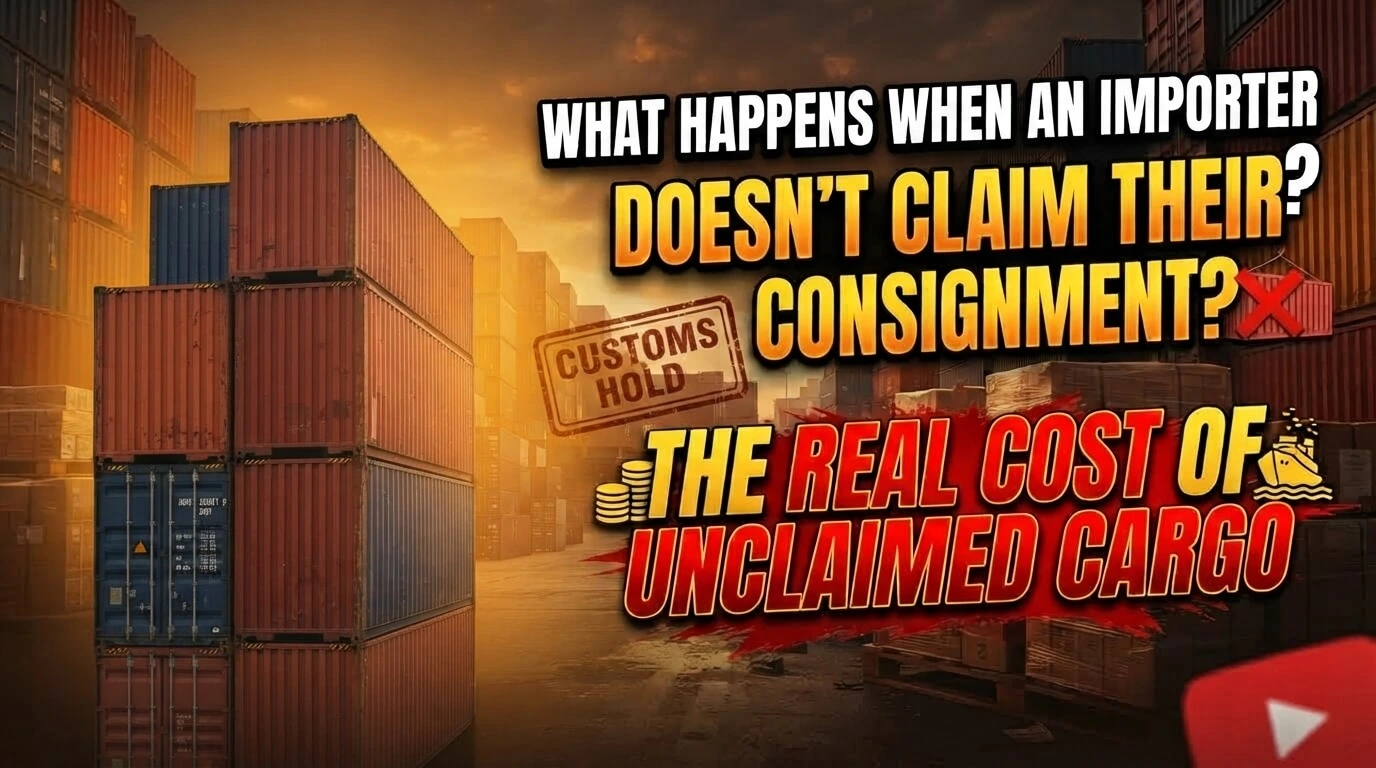
If you are an exporter, a freight forwarder or new to the world of trade there is one nightmare scenario you must understand before you ship a single container: what happens when your buyer simply does not show up to claim the goods?
Unlike local trade. Where you walk into a shop pay cash and walk out with your product. International import‑export deals carry serious legal, financial and reputational liabilities. When an importer fails to clear their consignment, at the destination port it does not just become “their problem.” It triggers a chain reaction that can financially devastate the exporter and freight forwarder involved.
In this post we break down exactly what occurs when a consignment goes unclaimed who is held responsible and how you can protect your business from this trap.
Why International Trade Is Riskier Than Local Business
In a transaction there is no ongoing liability once the sale is complete. You pay you take the product and the deal is closed. Nobody asks for your address history or business background to sell you a bag of rice.
International trade works differently. Before any serious export deal happens exporters typically verify:
- How long the buyer has been operating in the industry
- The buyers company profile and business history
- Verified business address and documentation
- Trade references and past shipping records
This due diligence exists because of the complications that arise when a buyer does not fulfill their end of the deal. Starting with failing to claim the cargo once it reaches the destination port.
Who Gets Stuck When a Container Isn’t Claimed?
When an importer refuses or fails to claim their container at the port two parties bear the brunt of the consequences:
- The Freight Forwarder. The party who made the booking with the shipping line
- The Exporter. The party who shipped the goods in the place
Here is why both get trapped in this situation.
The Shipping Company Holds the Container Owner Responsible
Shipping companies do not simply move your goods. They lease you the container itself along with a period. When your cargo arrives at the destination port and sits there for 30 days or more without the buyer coming to claim it the shipping line does not chase the importer. They come after the Exporter.
Why? From the Shipping Company’s perspective its expensive container inventory is meant to circulate between ports get emptied, reloaded and reused. Now the container is stuck indefinitely. Each day it sits unclaimed, detention and demurrage charges pile up. Someone has to pay for it.
What Happens to Unclaimed Goods at the Port?
Once cargo becomes “abandoned” or unclaimed at a port, customs and shipping authorities follow a defined process depending on the nature of the goods:
1. High‑Value Goods Get Seized and Auctioned
If the unclaimed shipment contains merchandise, port authorities or the shipping line will typically seize the goods and put them up for auction. The proceeds from the auction are used to recover:
- shipping charges
- Detention and demurrage fees
- Port storage costs
If the auction does not fully cover these costs the Exporter is billed for the remaining balance.
2. Perishable or Dangerous Goods Get Destroyed
If the unclaimed cargo is perishable (food items, for example) or classified as goods it cannot be auctioned or resold. Instead authorities. Discard the shipment entirely.
Here is the catch: the destruction charges themselves are billed back, to the Exporter on top of the detention and demurrage fees that have already accrued. So even though the Exporter never got to sell their product the Exporter ends up paying to have it thrown away.
The Domino Effect: Exporter → Freight Forwarder → Blacklisting
When an exporter does not pay the shipping charges and detention fees the shipping company does not simply let it go. Instead the shipping company takes action against the freight forwarder who made the booking. That is because the forwarder has a contract with the shipping line making them responsible for payments.
Now the freight forwarder must chase the exporter for the money. If the exporter still refuses to pay things get worse quickly.
Permanent Blacklisting by Shipping Companies
One of the serious outcomes is permanent blacklisting. The exporter can be banned for life from working with that shipping company. This isn’t a short pause. It’s a total ban that lasts forever.
Here’s something many people don’t know: shipping companies keep records for years. Even if the exporter forgets the issue or tries to restart business with the same carrier after several years the system remembers. In cases the shipping line will:
- Accept a new booking without raising any red flags
- Allow the shipment to move forward normally
- Then, at the last moment. When the Bill of Lading or delivery documents are ready. Demand payment of the old debt
This puts the exporter in a tight spot. They need their BL to complete the sale. They cannot get it without settling the old invoice. The shipping company uses this moment to pressure them
Legal Action Is Also a Real Possibility
Beyond being blocked the exporter may face consequences. Shipping companies have the right to take steps against exporters who do not pay for unclaimed cargo, detention or demurrage charges. This could lead to lawsuits, court notices and damage, to business reputation.
Why Shipping Companies Ask for Old Bills of Lading
This is also why some shipping companies, when a new company comes to them for a booking will specifically ask to see Bills of Lading from that business. This isn’t a simple request. It’s a way to check the companys background.
- If the company has a known shipping history bookings are usually approved without problems.
- If the company is new or has no history shipping lines are more careful often making things harder or asking for extra steps. Sometimes needing an NOC (No Objection Certificate) or something similar before moving forward.
Exporters and Freight Forwarders
If there is one thing to learn from this it’s that checking the buyer is not something you can skip in trade. Before you finish any export deal make sure you:
- Check the buyers business history and how long they have been in trade
- Make sure their business address is real and correct
- Ask for references or past trade documents if you can
- Know the payment terms and how long it will take to clear the goods before you ship
- Think about the risk of detention and demurrage when you make deals with new or not yet checked buyers
Unclaimed cargo isn’t a problem for logistics. It’s a money and legal problem that can stay with an exporter for years hurt relationships, with shipping companies and lead to being banned forever from carriers you might need later.
