
Introduction
Recently, there has been a surge in the worldwide appetite for both eco-friendly and traditional items, with clay as one subset of these two categories of items that has really taken off in terms of popularity and demand due to its natural cooling properties, cultural significance and sustainability.
From clay coolers to cooking pots, clay products are now being exported to every corner of the world, but especially to the Gulf and European markets.
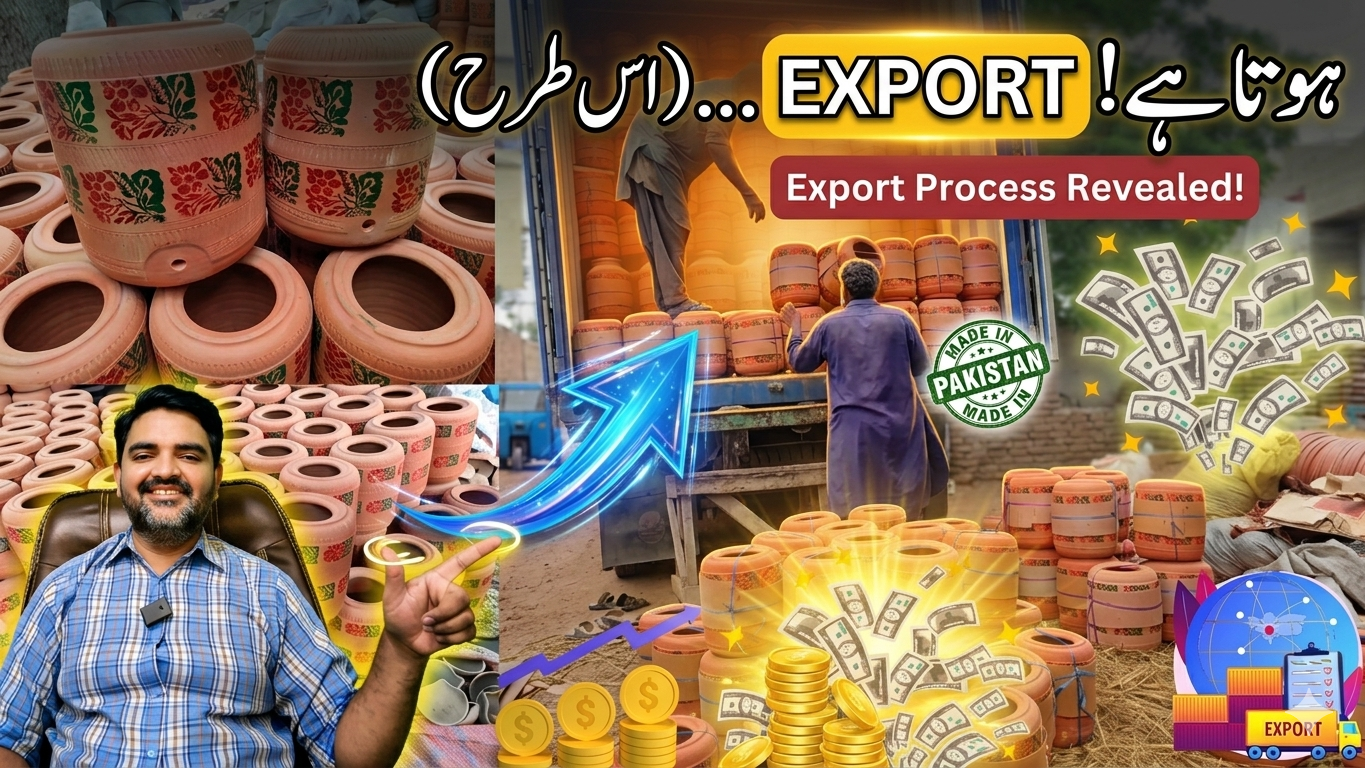
This guide will give you an overview of the process for exporting clay products by addressing topics such as how they are manufactured, packaged, loaded in containers, and how exporters establish relationships with their international buyers.
Overview of Clay Product Exports
Clay product exporting is a rapidly growing, profitable market, especially in countries that possess strong independent artisan craftsman. Exporters produce and provide a large variety of clay items for their customers, including:
- clay coolers
- water pots (matkas)
- cooking pots (handis)
- clay decorations
- garden pots
International buyers value clay items for their eco-friendliness and decorative aspects.
Manufacturing Processes for Ceramics
Ceramics are typically created by skilled artisans through a series of steps:
1. Clay Preparation
To create ceramics, raw clay must be cleaned, soaked and conditioned to provide an even surface to work with. Proper preparation will greatly enhance the strength of the final product and allow for a smooth finish.
2. Shaping/Designing
Artisans create different products (vases, pots) from the clay by using many traditional methods of shaping clay. Each artisan will create designs according to their personal style. Designs may be as simple as solid colors or very elaborate, depending on the artisan.
3. Drying/Firing
Once the artist has completed the shaping/designing portion of the process, the shaped product must dry completely before firing in a kiln. Proper drying will allow the shaped product to form a hard and durable surface.
4. Finishing
Most products will have some type of finish applied after firing has occurred. Some finishes will be coatings of paint while other finishes will be polished finishes to help to show off the beauty of that particular piece.
Types of Clay Products Exported by Exporters
Depending on their market, exporters will deal with various types of clay products.
Clay Coolers
- All sizes available
- Keeps food and drink cool without
- refrigeration
- Great for warmer climates
Water Pots (Matkas)
- Keeps water naturally cool
- Great used in every household
Cooking Pots (Handis)
- Great for traditional cooking methods
- Greatly increases the flavour of foods
Plant Pots
- Exporters will usually only export to Europe
- Useful for planting indoors and outdoors
Ways to Package Clay Products
Clay products are delicate and must be packed in a way that prevents them from being damaged while they are being shipped. Most exporters use two common methods of packaging:
1. Carton packaging:
- Protects product well
- Recommended for shipping long distances.
Is more expensive than some kinds of packaging.
2. Cost effective wraps:
- Products are wrapped to keep them from rubbing against each other.
- Reduces the expense of packaging products.
- Mostly used with bulk shipments.
When choosing the type of packaging, consider the customer’s needs and the cost of packaging.
Step by Step Loading Process of Containers
Loading clay products in containers is a skilled process. It requires planning and experience to complete the task successfully.
Check Products Prior to Loading
All clay products are examined to make sure that there are no defects that would make the products less reliable.
How Products are Arranged
- Place large products in the container first.
- Fill the gaps between large products with small products to use space in an efficient way.
Tight Loading
When loading clay products into containers, they should be closely stacked together, in order to:
- Prevent them from moving around the container.
- Reduce the chance of having a breakage.
- Maximize the use of the container space.
Final Adjustments
After all of the clay products have been loaded into the container there should be no empty space left inside the container. Any remaining items that can be put on top should be added to complete the loading process.
Containers 20 Feet vs Containers 40 Feet
Making the best choice for container size can be a big factor in how much money you make.
20 Foot Container
- Suitable for trials/small orders.
- First-time buyers will commonly use these containers
- Lower upfront investment
40 Foot Container
- More cost effective when shipping bulk orders
- Better profit margin when shipping these containers
- Experienced exporters will usually prefer to use these containers
Most exporters prefer 40-foot containers, due to the lower overall cost of the container compared to the additional profit they could earn if they used a 20-foot container.
Which Export Destinations Would Have Market Demand for Clay Products?
Clay products can be shipped worldwide. The two main markets are:
Gulf Countries:
- High demand for clay coolers.
- Clay products can be shipped through Dubai.
- Retail distribution can be good.
European Countries:
- Plant pots and decorative-type clay products are in demand.
- As with the Gulf Countries, eco-friendly products are a priority.
As a result, these markets both have a steady source of demand, making them ideal for exporters.
Challenges Encountered During Clay Product Exports
Although the exportation of clay products can be very profitable, it does have several types of challenges such as:
- Fragility of products
- Risk of loss during transport
- Shipping and packaging costs
- Difficulty in organizing logistics
- Building trust with international buyers
A successful exporter will need to discover methods to conquer these obstacles in order to be successful in their clay exportation business.
The significance of Quality Control
Quality plays a major role in the success of any exporter. Exporters should:
- Check every item before it leaves their premises
- Never ship out defective items
- Carefully check that the size and design of each item is standard
By doing these items, the exporter will create satisfied customers and reduce the number of items returned or customers that complain.
How to Create Trust with Your Buyers
Trust is one of the most critical elements of international trade. Many buyers have been hesitant to make purchases because past buying experiences have left them disappointed. To build trust with buyers through exportation, exporters should build a relationship based on:
- Transparency
- Accurately providing product information
- Delivering goods on time
- Maintaining honest communication
Building solid relationships with buyers will help create a solid foundation for your exporting business, thereby assisting your ability to repeat business with the same buyer over time.
The Growing Popularity of Clay Products
Clay products are gaining popularity around the world due to their:
- Eco-friendliness and sustainability
- Affordability
- Cultural significance
- Natural usefulness (i.e., cooling, cooking, and storage)
As consumers are increasingly choosing products that are environmentally friendly, the demand for clay products will continue to grow.
Conclusion
The exportation of clay products is an excellent opportunity for manufacturers and entrepreneurs alike. Each stage of the process including production, packaging and container loading requires careful planning and experienced staff. By providing quality products, packaging them effectively and building relationships of trust with the buyers of these products, exporters can create a viable and profitable export enterprise in global markets.
